

Nude Blog
Naturist: definition, origins, values and practices
Let’s define naturism

When you take an interest in naturism, whether for its benefits, out of curiosity or to consider a stay at a naturist campsite, one question often comes up: what does it mean to be a naturist? Behind this term lie a philosophy of life, strong human values and a natural relationship with the body and with nature.
Let’s explore together the definition of naturism, its history, its principles and the way it is practised today.
Key takeaways
To understand what a naturist is
A naturist practises chosen, respectful and non-sexualised communal nudity, in a natural and caring environment.
The International Naturist Federation defines naturism as a way of living in harmony with nature through communal nudity.
The term appeared in Europe at the end of the 19th century, then in the 20th century came to describe a structured, social and educational practice.
Its key values are respect for the body, kindness, connection to nature and a freedom far removed from any sexual connotation.
It is practised in authorised places: naturist campsites and holiday villages, affiliated clubs, official beaches or marked-out areas.
Naturist: the simple definition
A naturist is a person who practises naturism, a way of life based on chosen, respectful and non-sexualised communal nudity, in a natural, healthy, safe and caring environment.
The official definition (INF, International Naturist Federation) of naturism is: a way of living in harmony with nature, characterised by the practice of communal nudity, with the intention of encouraging respect for oneself, for others and for the environment.
Its aim is to encourage respect for oneself, for others, for nature and for the environment.
The origin of the word “naturism”
The word naturism derives from the term nature, associated with the idea of a “return to a natural way of life”. It appeared in Europe at the end of the 19th century within hygienist and medical movements advocating outdoor living, sunshine, healthy eating and natural cures.
From the early 20th century, the term was used to describe a structured practice incorporating nudity within a social and educational framework, with values centred on well-being, health, harmony with the environment and respect for others.
Being a naturist is not the same as being a nudist: what’s the difference?
Being a naturist is not the same as being a nudist: there is an important difference between the two notions.
Nudist:
- Seeks nudity for comfort or personal pleasure
- May practise alone, at home or discreetly
- An approach not necessarily linked to ecology or personal development
- Nudity is the main objective
Naturist:
- Places nudity within an overall philosophy of well-being
- Favours supervised, communal, respectful and caring spaces
- Carries strong values: ecology, respect, freedom, harmony, simplicity
- Nudity comes with an ethic and a way of life
In short: all naturists are nude, but not all nudists are naturists.
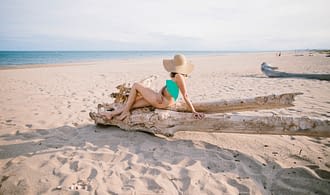
The core values of the naturist way of life
Before going any further, it is important to remember that when we talk about the definition of a naturist, we are not limiting ourselves to nudity as a gesture. Adopting a naturist way of life means embracing a genuine human, social and environmental philosophy, centred on respect and overall well-being.
Among the essential values of the naturist movement, we find:
- respect for the body, its differences and its diversity, without judgement or comparison
- naturist kindness and the acceptance of oneself and of others
- connection to nature, supported by an ecological and responsible approach
- naturist individual freedom, far from any sexual, exhibitionist or provocative connotation
- mental and physical well-being, fostered by a simple, natural and uninhibited life
The naturist movement aims to be healthy, authentic, inclusive and family-friendly, which explains its presence in many naturist campsites, holiday villages and leisure venues dedicated to a respectful and structured practice.
Put it into practice
Experience naturism at one of the 6 France 4 Naturisme campsites, with your family, with friends or as a couple.
Choose my campsite
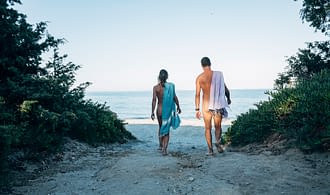
Where is the naturist way of life practised?
To fully understand the definition of a naturist in a practical context, it is essential to know where this philosophy can be freely expressed. Naturist practice must take place in authorised, suitable places that respect naturist ethics, in order to guarantee safety, serenity and privacy.
Among the spaces dedicated to naturism are notably:
- naturist campsites and holiday villages, perfect for an immersive, family-friendly stay
- naturist clubs and associations affiliated to recognised federations
- official naturist beaches or marked-out areas
- naturist wellness centres, spas or holistic establishments
- natural estates or authorised trails, subject to local regulations
Choosing specialised facilities is essential to preserve respect, hygiene, discretion, conviviality and safety, the fundamental values of naturist practice.
Advice from the France 4 Naturisme team: for a first experience, choose a naturist campsite rather than an isolated beach. The setting is supervised, the rules are known to everyone and you can discover life without clothes at your own pace, between swimming, walks and moments of relaxation. A stay of just a few days is often enough to feel completely at ease.
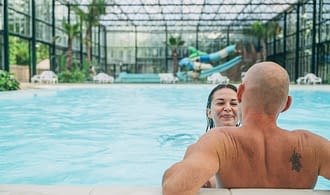
The benefits of the naturist way of life
The definition of the naturist also encompasses the benefits this practice brings to overall health. Indeed, naturist practice is associated with many benefits, for both the body and the mind.
Physically, it encourages natural exposure to the sun, which allows the body to produce vitamin D. Short exposures are enough: protect yourself from the sun the rest of the time. It can also help to reduce stress and release muscle tension thanks to a more soothing connection with the environment.
Mentally and emotionally, living nude in a respectful, natural setting makes body acceptance easier, boosts self-confidence, provides a deep feeling of freedom and encourages letting go. Naturism thus helps to free oneself from the social gaze, often a source of insecurities, and makes it possible to reconnect with essential human values.
Living nude in a caring, natural and supervised environment reduces social pressure, improves self-image and strengthens the sense of belonging to a community that shares the same values.
By definition, the naturist is therefore not limited to mere nudity: it is a thoughtful, healthy, respectful and deeply human way of life, one that encourages harmony between the body, the mind, nature and others. Founded on freedom, kindness, ecology and self-acceptance, naturism is practised in dedicated, supervised and safe spaces, where everyone can feel fully themselves, far from social pressures and prejudices.
Whether curious, a beginner or a committed practitioner, naturism offers a unique experience, geared towards well-being, simplicity and connection to what matters most.
FAQ: definition of naturism
-
Who officially defined naturism?
The reference definition comes from the International Naturist Federation (INF). It describes naturism as a way of living in harmony with nature, characterised by the practice of communal nudity, to encourage respect for oneself, for others and for the environment.
-
How long has naturism existed?
The term naturism appeared in Europe at the end of the 19th century, within movements advocating outdoor living, sunshine and healthy eating. From the early 20th century, it described a structured practice incorporating nudity within a social and educational framework.
-
Is naturism a sexual practice?
No. Naturism is non-sexualised communal nudity, far from any exhibitionist or provocative connotation. It aims to be healthy, inclusive and family-friendly, which explains its presence in many campsites and holiday villages designed to welcome young and old in complete peace of mind.
-
Where can you practise naturism in France?
Naturism is practised in authorised and suitable places: naturist campsites and holiday villages, clubs and associations affiliated to recognised federations, official naturist beaches or marked-out areas, naturist wellness centres. These spaces guarantee respect, hygiene, discretion and safety.
Sources and references
- Fédération Naturiste Internationale (International Naturist Federation), “Votre voie vers le naturisme” (Your path to naturism), inf-fni.org, accessed in 2026. View source
- Institut national du cancer (INCa, French National Cancer Institute), “L’Institut national du cancer alerte sur les dangers de l’exposition aux rayons UV” (The French National Cancer Institute warns of the dangers of UV exposure), cancer.fr, 2025. View source
Enjoy the benefits of naturism
and availabilities
Our campsites


